When I was in high school (circa 2015), my mother told me one of the few stories that truly haunts me. Not many things make my stomach turn, but the true story of Saartjie “Sarah” Baartman’s life, death and afterlife made me truly ill as I deep dove into it in my early adolescent nerdiness. And given the Margaret Atwood-esque scent permeating…the entire planet right now, I thought it an appropriate topic for our first full length post. So I present to you her story, along with that of a more recently impactful Black woman, with a bit of my own commentary of course.
Saartjie “sarah” Baartman: Hottentot Queen
Born to a First Nations tribe in South Africa in 1789, Saartjie Baartman’s life story is one of colonialism at its core, and thus follows themes of exploitation and ridicule above all else. Taken from her homeland, family, and tribe by a pair of Englishmen fascinated with her body that was deemed abnormal by white standards, Saartjie was the main attraction of multiple “freakshows” in Europe in her 20s. She was exploited from the moment she stepped foot in London to debut her act as the “Hottentot Venus” in the Piccadilly Circus.
From this point on she was carted around Europe, obligated by her contract to participate in increasingly dehumanizing displays of the areas of her body found most exotic to her captors– her genitals and her buttocks. It’s from a slang term for the look of her labia that her title originated; even the right to a name was stolen from Baartman in the White Man’s effort to other her. In reality the supposed oddities of her body were quite common, just not in the limited portion of the population that the English colonists and French scientists studying her had access to.

The Khoikhoi people who tell Saartjie Baartman’s story and pay her respects today refer to her as the Hottentot Queen as a way to reclaim the word most often used to replace her name in her time in Europe.
Saartjie was not only forced to bare herself physically in front of strangers and undergo invasive testing in the name of pseudoscience, but she was also most likely prostituted. This is always one of the tactics taken against us-when in doubt, The White Man defaults to the weaponization of others’ sexuality in an effort to obscure their own deviance from view and keep the disenfranchised vulnerable. Her agency was taken from her even in death, the gross fascination of one particularly depraved French naturalist resulting in the pickling of her genitals and brain, which were displayed on French soil until the start of the 2000s. For hundreds of years after her passing her body still was not fully her own, and her fate is not at all singular. Unwarranted dominance over another’s body and sexuality was a theme in Saartjie’s life, it has been a theme in every period of slavery, and it continues to be a theme in the ways in which our own leaders go about governing.
The minimization, ridicule and policing of black bodies, coupled with a complete disregard for our health or wellbeing is a bitter, bitter, cocktail for which the tap never seems to run dry. I tell this story for a few reasons:
(1) More people need to know about Saartjie Baartman’s life and death. She has gone far too long going unheard and disrespected.
(2) To provide a concrete example of the atrocities people commit when they decide they have power over another’s body.
(3) To do my part to ensure that you stay angry, because behavior like this has been going on for centuries and clearly has yet to meet its well deserved fiery end. Those of us in groups on the receiving end of this trend are still unsafe- when we’re running errands, leaving work or fighting to keep the rights that no one should have dared to threaten in the first place.
Oluwatoyin Salau: Activist Trailblazer and Leader
Y’all remember when the pandemic hit in 2020, then we entered a mini Civil War II? On second thought, I’m sure that period of time is as absolutely seared into each of your memories as it is mine. As I watched the less immunocompromised fight in the streets from the walls of the apartment I found myself quarantining in with my parents, I paid rapt attention to the news, I took notes. I didn’t want to give myself an opportunity to forget what was happening, even as my heart ached more intensely for my people in every passing moment.
When the information was available, my notes were detailed, like the ones about Oluwatoyin Salau, who was subjected to a multitude of injustices in her life. Over the course of the summer, the 19 year old had become a breakout leader and was quickly becoming a pillar of her community. But as she had been leading and fighting in the streets for her rights, she had also been struggling privately with familial issues, the climax of which resulted in her becoming homeless in the midst of the protests. When her friends lost contact with her shortly after, they became concerned and filed a missing person report. It wasn’t until nine days later that the answer was discovered.
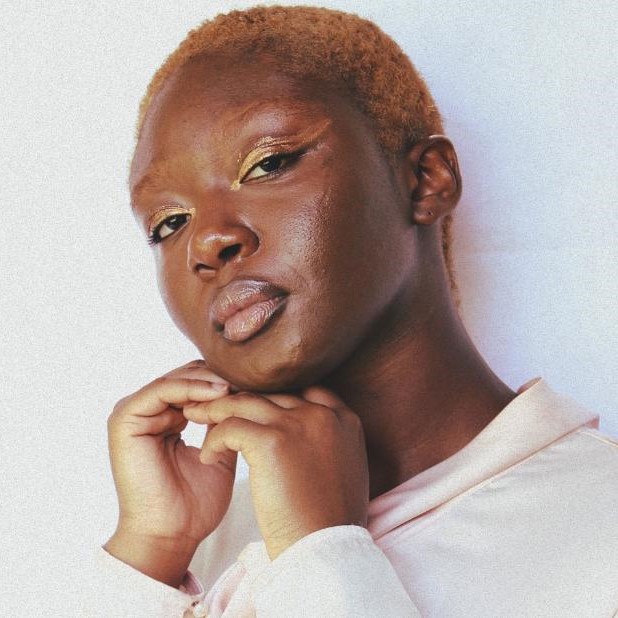
Oluwatoyin had found a man who said that he was willing to take her in for a while after she left her family’s home, and he kidnapped her. The man who offered to shelter her in her time of need was both her murderer and her rapist; a tweet about being sexually assaulted was the last heard from her. The desperation for power coupled with the delusion of superiority over others involves continuous attempts to rob the perceived ‘lesser’ of their dignity. Her assailant practiced on a small scale one of the techniques our government has spent the last few hundred years perfecting.
In my notes I kept a list. Every single new victim of profiling and brutality at the hands of law enforcement that crossed my news feed was written down; I read their stories, learned their names and recorded them so that I couldn’t forget. My list sat on my desk, and every day I marked as the number of unjust Black (and queer, and trans, and disabled) deaths grew exponentially…until the day I came across the confirmation of Oluwatoyin’s death. Her case broke something in me that had been gradually cracking for weeks, and I stopped keeping tabs so closely soon after. Maybe I couldn’t do it anymore because she was younger than I was at the time. Maybe I couldn’t do it because I identified with her.
“We are allowed to get angry, Black people…We have a right to get angry. We don’t have to hold that anger in.”
O. Salau
No matter the reason, I took some time off to really feel my grief for this stranger. As I mourned this powerhouse of my generation, though, I found myself adopting a phrase that I’ve kept with me since, and often mutter aloud when another is lost: I’m sorry. I’ll remember you. I’ll fight for you. Unfortunately, this mantra seems to be slowly re-emerging in my vocabulary.
The Black Body, Medical Negligence and Roe v Wade
Black people’s bodily autonomy has never been respected, especially when it has to do with matters sex related. Even when they have already done their level best to alienate and humiliate us, even as they’ve already decided to rob us of our lives, those who aim to break the spirit of those they fear so often attempt to take this ultimate freedom from us.
From the inception of the US, not only the enslaved, but the impoverished, disenfranchised and imprisoned have been subjected to sexual assault and forced birth. Disrespecting the sanctity of minority bodies is a value woven into the cloth of both our political and medical systems, and crucial to maintaining the unfortunate power structure currently in place. And even less fortunately, the removal/ threatening of others’ sexual freedom is an act of violence that never arrives unaccompanied. As many of y’all have seen warnings of in recent discourse, the overturning of Roe is certainly the first of a series of rollbacks and alterations to come to the policies most integral to keeping minorities safe. Surely no minority group will come out of this period unscathed, even those which still struggle to accept their status amongst the oppressed.
You know, it’s a little funny that white women en masse only seemed to begin to fear our new reality when The Handmaid’s Tale TV series came out. Not funny, “ha ha”, but funny in the way that a dictator’s quirky hobbies might be–that is to say, simultaneously and inexplicably capable of multiplying the horror of the situation in its simplicity. For many of us, our bodies have never truly been treated as our own. That doesn’t change that they are ours, though, there’s absolutely nothing any decrepit politician can do that will ever impact the truth of this statement. I think it’s just due time that the Powers That Be get a not-so-gentle reminder of that and I’m hoping y’all are prepared to help deliver it. I know I am.
Sources & Further Reading
If you wanna fact check me:
–The significance of Sarah Baartman
–The disappearance and death of activist Oluwatoying Salau, explained
–Oluwatoyin Salau: Activist Found Dead After Tweeting About Sexual Assault
If you wanna do some additional work:
–Rage Becomes Her: The Power of Women’s Anger by Soraya Chemaly
–Killing the Black Body by Dorothy Roberts
 What's Been Withheld